A clerk of the works in Montclair, NJ, is the owner's full-time set of eyes on a job site, checking that materials and workmanship actually match the drawings before a problem gets expensive. Search that phrase locally and Google's top result is Montclair's Township Clerk, a records and elections office with no connection to construction oversight, which is exactly why so many property owners, school boards, and developers get confused about who to call. This guide clears that up and covers duties, qualifications, typical New Jersey costs, and who around Essex County actually hires one.
What Is a Clerk of the Works?
A clerk of the works is an owner's on-site representative who confirms that materials and workmanship meet the approved plans, specifications, and contract documents. Montclair's own township clerk page describes that office as "your doorway to local government" , a role built around minutes, licensing, and elections, not jobsite inspection.
The construction role traces back centuries. The role is based on the impartiality of the clerk of works in ensuring that value for money for the client, rather than the contractor, is achieved through rigorous and detailed inspection of materials and workmanship throughout the building process. In practice, that means the clerk of the works answers to the owner, not the general contractor, which is the whole point of hiring one.
The title is also used interchangeably in some circles with "owner's representative" or "resident engineer." This role was coined "Clerk of Works" and is commonly used today in Great Britain and the Northeastern United States.
What Does a Clerk of the Works Do on a Jobsite?
Day to day, the job is less about paperwork and more about walking the site with a critical eye. Typical responsibilities include:
- Reviewing drawings and specifications before each phase of work begins
- Making visual inspections of materials and installed work
- Flagging defects and tracking them through the punch list to completion
- Monitoring the contractor's schedule and reporting delays to the owner
- Keeping a daily site diary with photos, weather, and crew counts
- Attending progress meetings with contractors, architects, and engineers
Records matter as much as inspections. A well-run clerk of the works file typically includes copies of all correspondence concerning the project, contract documents, construction schedule, change orders, test results, permits, inspection reports, insurance policies, minutes or summaries of meetings, shop drawings, and invoices . That paper trail is what protects the owner if a dispute ever goes to arbitration.
Clerk of the Works vs. Site Manager vs. Owner's Representative
These three titles get used loosely, and it causes real confusion when owners are vetting candidates. Here's how they actually differ:
| Role | Works For | Primary Focus | Authority on Site |
|---|---|---|---|
| Clerk of the Works | Owner | Quality and spec compliance | Observes and reports, does not direct the work |
| Site Manager | General contractor | Schedule, labor, daily operations | Runs the crew and the build sequence |
| Owner's Representative | Owner | Budget, schedule, and overall project advocacy | Broader scope than a clerk of the works, often oversees one |
A site manager runs the day-to-day build, covering schedule, labor, and safety, while a clerk of the works monitors quality and compliance independently, inspecting, observing, recording, and reporting rather than running the site. Ask any candidate how they define their own title. In the Northeast, "clerk of the works" and "owner's representative" often overlap, but scope and reporting lines still vary firm to firm.
Who Hires a Clerk of the Works in Montclair and Essex County?
Three groups drive most of the demand locally:
School districts. New Jersey's state school construction program builds in this kind of oversight at the state level. State rules allow the New Jersey Schools Development Authority to engage a construction manager to serve as the Authority's representative during a school facilities project, providing project oversight and reporting, value engineering services, and cost estimating. A local school district renovating a Montclair elementary school often layers a clerk of the works on top of that for day-to-day field verification.
Municipalities. Some New Jersey towns have gone as far as creating the position by ordinance. Nearby Riverdale Borough's municipal code spells it out directly: "The Clerk of the Works shall supervise the construction of the Riverdale Library or any other construction project that may be authorized by the Mayor and Council." It's a useful reminder that this isn't a theoretical job title in New Jersey, it's written into local law in multiple towns.
Private developers and institutional owners. Multi-unit residential buildings, industrial buildouts, and commercial fit-outs all benefit from an independent set of eyes, especially when the owner isn't on site daily.
One distinction worth knowing: a municipal building inspector is not a substitute for a clerk of the works. Municipalities are delegated the bulk of the responsibility for enforcing New Jersey's Uniform Construction Code, including performing plan reviews, issuing permits, inspecting construction, and issuing certificates of occupancy. That inspector checks for minimum code compliance on behalf of the town. A clerk of the works works for the owner and holds the project to the standard in the contract, which is often higher than code minimums.
If you're planning a larger commercial or industrial build in town rather than a school or municipal project, our guide on industrial building contractors in Montclair covers how that hiring process differs.
Qualifications and Skills to Look For
There's no single licensing path for this role in the U.S., so vetting matters. At minimum, look for:
- A background in a construction trade, engineering, or construction management, not just classroom credentials
At least five years of hands-on experience in a related construction occupation, which is the baseline the federal government uses for comparable construction inspection roles
- Working knowledge of the NJ Uniform Construction Code and standard AIA contract document structure
- Strong written communication, since daily logs and punch lists are the deliverable
- The ability to read structural, mechanical, and electrical drawings, not just architectural plans
- A level temperament; the job involves telling contractors their work doesn't pass, repeatedly
For context on the broader inspection field, federal labor data projects little to no growth in construction and building inspector employment nationally through 2035, even though thousands of openings appear every year as the existing workforce retires , which is part of why qualified local candidates are worth vetting carefully rather than rushing to hire.
How Much Does a Clerk of the Works Cost in NJ?
Pricing follows a few standard models nationally, and New Jersey rates generally fall in the middle to upper end of these ranges given regional labor costs.
| Fee Model | Typical Range | Best Fit |
|---|---|---|
| Percentage of construction cost | 1% to 5% | Full project lifecycle, larger capital programs |
| Hourly rate | $75 to $300+ per hour | Short engagements, bid review, closeout |
| Monthly retainer | $5,000 to $25,000 per month | Multi-year or phased capital programs |
An owner's representative fee usually falls between 1% and 5% of total construction cost, or an hourly range of $75 to $200 or more per hour, depending on project size, scope, and complexity. More recent pricing guides confirm the range has held steady into this year: as of October 2026, published guides quote hourly rates of roughly $75 to $300 and monthly retainers of about $5,000 to $25,000.
The return on that fee shows up later. Catching a bad waterproofing detail or an out-of-spec material delivery during construction costs far less than tearing out finished work after the fact.
Do Homeowners in Montclair Need This Level of Oversight?
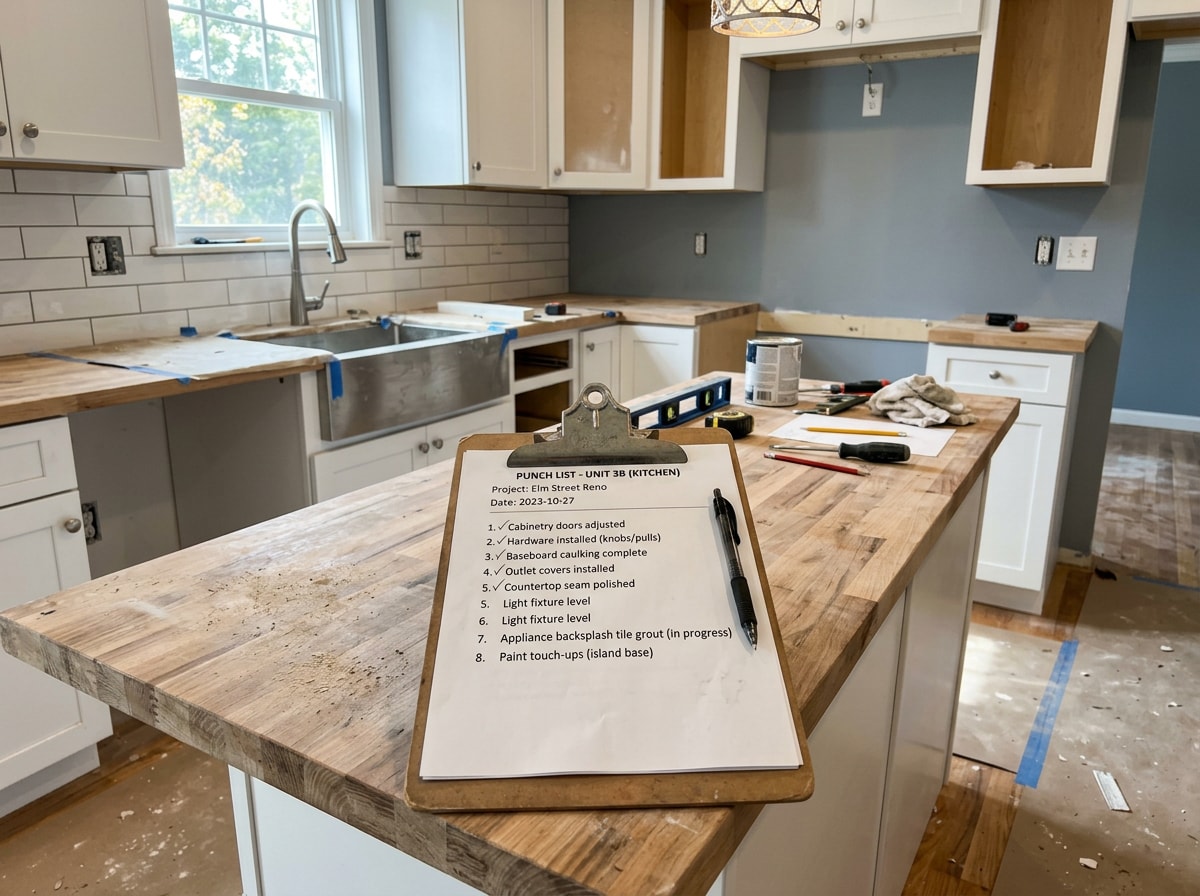
Most single-family renovation projects, kitchen remodels, bathroom updates, roof replacements, don't need a formally titled clerk of the works. But the underlying idea, independent verification that the work matches what you paid for, still applies.
If you're planning a major Montclair renovation, the same quality-check mindset matters whether you're doing a full kitchen remodeling project or a bathroom remodeling overhaul. On larger additions or ground-up builds, we've seen firsthand how a documented daily walkthrough, photos, punch lists, material checks, catches issues long before drywall goes up and hides them. You can see examples of completed work on our projects page.
How Fahmi Home Solutions Supports Montclair Projects
Fahmi Home Solutions works throughout Montclair, NJ and the surrounding towns, and on larger remodels and additions we build the same documentation discipline a clerk of the works would bring, daily progress notes, photo records, and a punch list that gets closed out line by line before we call a project done. That habit comes from years of running jobs where the owner isn't on site every day and needs to trust what they're being told.
If you're planning a kitchen, bathroom, roofing, or flooring project in Montclair and want that level of accountability built in from day one, get a free estimate and we'll walk you through exactly how we document the work. You can also browse our homepage for the full range of services we handle across North Jersey.
FAQ
What does a clerk of the works do on a construction site?
A clerk of the works inspects materials and workmanship against the approved plans, tracks defects through to correction, and keeps daily records the owner can rely on if a dispute comes up later.
What is the difference between a clerk of the works and a site manager?
A site manager works for the contractor and runs daily operations, schedule, labor, and sequencing. A clerk of the works works for the owner and checks that the finished product matches the contract, without directing the crew.
Is a clerk of the works the same as an owner's representative?
Often, yes, especially in the Northeast. But scope can vary by firm, so ask any candidate directly how they define the role and what's included.
How much does a clerk of the works cost?
Expect 1% to 5% of construction cost on a full engagement, or $75 to $300+ per hour for shorter, targeted work. Monthly retainers for multi-year programs typically run $5,000 to $25,000.
Do I need a clerk of the works for a home renovation in Montclair, NJ?
Most residential kitchen, bathroom, or roofing projects don't require a formally titled clerk of the works. A reputable local contractor who documents progress and holds to a clear punch list accomplishes the same goal at a smaller scale.
What qualifications should a clerk of the works have?
Look for hands-on construction or engineering experience, at least five years in a related trade, familiarity with the NJ Uniform Construction Code, and strong written reporting skills. There's no single national license, so references matter more than a certificate.
For more on related NJ construction hiring topics, see our guide on basement construction contractors in Ridgewood, NJ.